Duolingo’s Next AI Opportunity is with What’sApp

Today’s post looks at Duolingo — a DTC ed-tech brand with a massive global user base and a freemium model that’s become the standard for language learning apps. The stock has pulled back roughly 65% from its $545 peak this past May, and while this isn’t an investment breakdown, it’s obvious that the market now values one thing above almost everything else: Duolingo’s AI engine and how it scales.

I see two product-led partnership opportunities that could help accelerate that engine:

  1. A WhatsApp integration that brings Duolingo’s AI Roleplay experience directly into the world’s most-used messaging app
  2. a fintech-driven rewards program with platforms like PayPal or Revolut to improve LTV/CAC by incentivizing consistent learning behavior.

The WhatsApp idea is the core focus here. The concept is simple: enable language learners to practice short, AI-powered conversations inside WhatsApp — where people already spend a significant portion of their daily screen time. This turns messaging into micro-practice, strengthens daily engagement, and meaningfully improves the value of their emerald customers in Duolingo Max.

Given Duolingo’s scale and WhatsApp’s dominance in markets like India and Brazil (~1B combined users), an initiative like this could drive engagement for ~20M learners and potentially generate $25–30M in incremental annual bookings through Max upgrades.

If Meta platform access, data restrictions, or the OpenAI agreement make that difficult, the fintech rewards angle offers a lighter-weight alternative that still deepens habit formation.

Both directions support Duolingo’s broader mission: make learning “fun and universally accessible,” increase daily engagement, and build differentiated, durable product experiences through partnerships.

Share this:

The New Rules of Brand Discoverability in the Age of AI Agents

Every brand, from a scrappy startup to a Fortune 500, faces the same fundamental problem: How do you get discovered in a sea of consumer choices?

For decades, the answers shifted: first it was getting shelf space at brick and mortar retailers, then Amazon search as online sales took off around 2010. Then Google SEO. In every era, the challenge was the same — being visible in a world where gatekeepers decide who gets surfaced and who gets ignored. Now, the gatekeepers are AI agents.

Share this:

AI Business Models

AI is moving fast, but the business models behind it are even harder to decode. I’ve been spending time mapping out who the key customers are and how money flows through the system. Foundational providers (OpenAI, Anthropic, etc), wrappers (Harvey, Jasper, etc) — each plays a different role in the value chain, and investors and operators alike are still figuring out how to navigate the commercial landscape.

I’ve built and scaled growth models at companies like Newell Brands, Casper, Blue Apron, and Lime, and today I advise startups, investors, and corporates on how to navigate this shifting landscape. To cut through the noise, I created this AI Business Model Guide — a simple framework to understand where opportunities lie and where risks emerge.

If you’re building in AI or exploring partnerships, this guide is a starting point. The presentation is embedded below.

Share this:

AI Wrappers Look a lot Like DTC Brands — And That Should Worry Investors

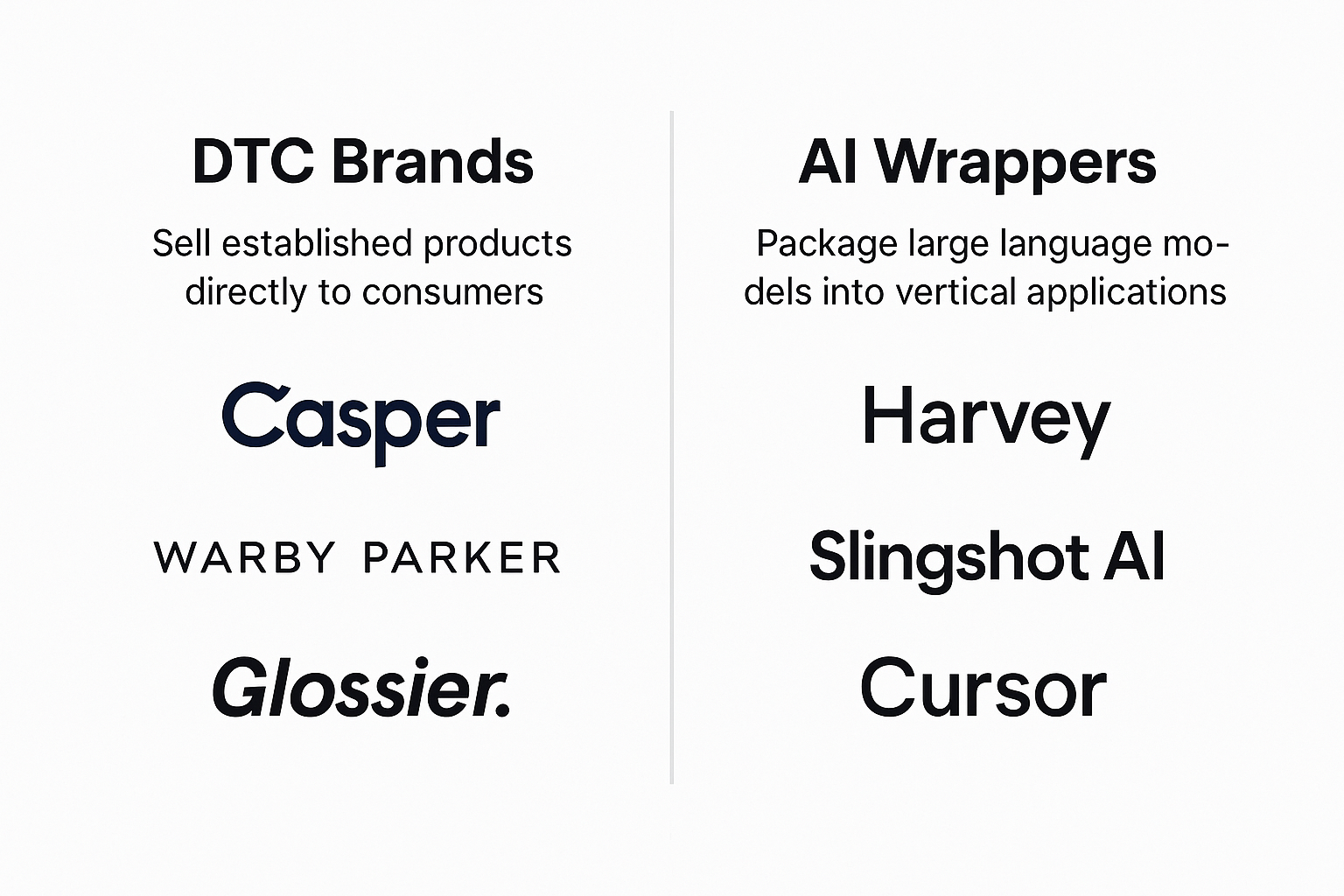
Over the last year, niche AI startups have exploded onto the scene. Companies like Slingshot (mental health), Harvey (legal), and Jasper (marketing), Cursor (code editor) are racing to stake out territory on top of large language models like ChatGPT and Gemini. At first glance, they feel innovative and differentiated. But if you squint, they look a lot like the early wave of direct-to-consumer (DTC) brands — Casper, Warby Parker, Glossier, Harry’s and Peloton — that disrupted incumbents not by reinventing the product, but by reshaping the story, distribution, and consumer experience.

I saw this firsthand at Casper. We weren’t reinventing the mattress — foam was foam — but we were reinventing the consumer experience and telling a story incumbents weren’t telling. We addressed a lot of the pain points in the legacy purchase experience (returns, trial, etc) with novel solutions.  

The analogy here is hard to ignore.

Share this:

AI: The Disruption of Management Consulting

The big management consulting firms will have to adapt quickly to AI. The days of paying half a million dollars for a strategy deck are over. By way of example, I was curious, what is next for the food delivery sector (e.g. UberEats, DoorDash, etc) so I put together a prompt and leveraged ChatGPT. 

Share this:

The Rise of AI Shopping Agents

Back in March 2023, I wrote this article about how I was beginning to leverage AI (specifically ChatGPT) in helping me frame business partnerships. This was relatively early in the commercialization of AI. That now feels like an eternity as the space continues to evolve. Today’s post is not an overview of AI – for newbies I highly recommend LinkedIn Learning’s Generative AI for Business Leaders course taught by Tomer Cohen. Google also has a training module on Coursera for business leaders which is a good primer.  It’s easy to go down a rabbit hole trying to wrap your head around the space so my recommendation is to start with the basics and then tailor the learning to your specific field. 

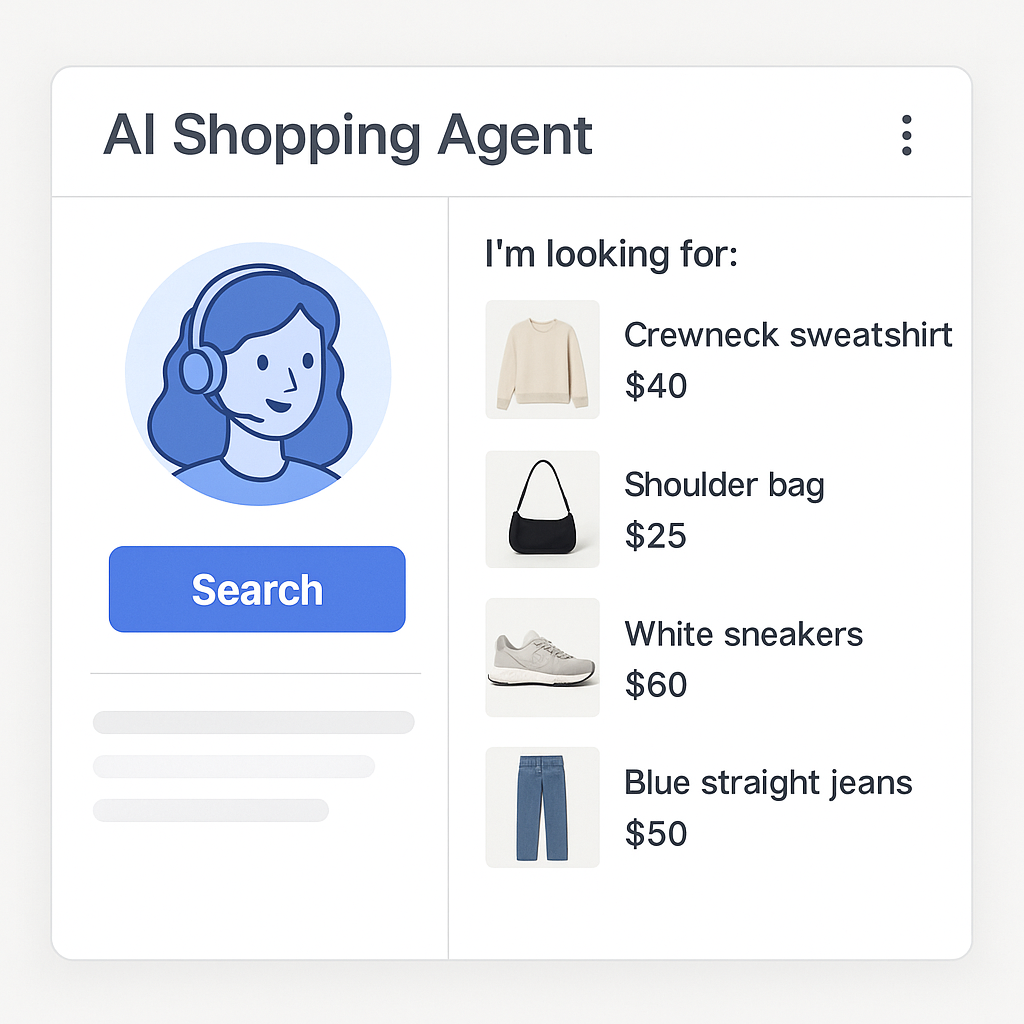
I wanted to share today another use case that has been generating noise and is relevant to retailers and brand marketers – and top of mind for me given my background working in and consulting DTC brands, consumer goods companies, and retailers – the rise of AI shopping agents. 

Share this:

Newell and VF: How to Kill a Consumer Goods Giant

I’ve taken a bit of time off from blogging recently to focus on other things, but recently came across this article from the WSJ about the fall of VF Corp ($VFC) and it reminded me of other legacy brand aggregators, such as Newell Brands ($NWL), that have also struggled as of late. There is a common strategy across both companies – they chose to concentrate key decisions around marketing, product development, and sales at the corporate versus brand level. And the results clearly show that was a mistake. 

Share this:

Ad Agencies Need to Innovate to Win in Retail Media

Total digital ad revenue in the US climbed 10.8% to nearly $210b last year, despite a slowing economy and a myriad of other challenges. While the growth rate is a far cry from the 35% figure in 2021, it still shows that marketers continue to spend online to drive purchase consideration. But there was an interesting stat included in that $210b spent last year – 20% was on retail media advertising. 

Share this:

Utilizing AI to Help Build/Frame Partnerships 

One of the most difficult aspects of doing partnerships or business development regardless of industry or sector is clearly understanding why two parties should get “married.” In my experience building numerous JV’s/partnerships, one theme continues to resonate, and that is how do you construct a winning partnership where each side feels as if they have gotten equitable value. Oftentimes, initial discussions tend to be more tactical or acutely focused on a very specific asset that one side seeks access to, when the focus should be framing the outcome from inception. This entails being able to articulate clearly the ‘gives’ and ‘gets’ of a deal and not jumping right into the weeds. Jeff Bezos has said, at Amazon, before any work is done on a new partnership, the press release is written. This accomplishes a couple key things. 

Share this:

UberEats and DoorDash are Becoming More like Amazon

If you’ve used food delivery apps like DoorDash or UberEats over the last few years, you’ll notice the number of restaurants on the platform has skyrocketed. And interestingly, they all seem to be offering the same types of cuisines. As it turns out, these platforms have become a battleground for testing virtual concepts. In 2021 there were roughly 10,000 virtual brands on UberEats but today that number is now 40,000. 

Share this: