Facebook & Twitter – A Move to Subscription Makes Sense

A recent report claims $TWTR is considering a subscription model to augment a significant decline in advertising revenue. This would be among the first of the big social media companies to consider this approach and I believe could lead to a reckoning in the industry. $FB is currently facing a backlash among advertisers who claim the social media company isn’t doing enough to control controversial rhetoric on its platform and will inevitably see a decline in advertising revenue. A few years ago, the idea of paying to access online “news” content wasn’t a thing. Publishers were primarily in the business of selling ads in offline media and as they built their online presence they carried this business model over. As consumers got irritated with intrusive ads, it became clear they had to change their offering. Newspapers such as the NYTimes piloted new paywall programs to test consumers’ appetite for subscription based products. The result was mostly favorable, and as a result, many publishers today have pivoted their business models to favor subscription over advertising revenue especially as it becomes increasingly difficult to get ad dollars from brands in a world in which the big tech companies ($GOOG, $FB, etc) dwarf smaller publishers in traffic.


Share this:

Let the at-home Workout Race Begin

I’ve always had a strong viewpoint that digitally native vertical brands are a dime a dozen and those who will have successful exits are the ones who are vertically integrated, own manufacturing, strong defensible positions and/or are durable/consumable businesses built on recurring revenue and more enticing LTV metrics.  With the recent news on Lululemon acquiring Mirror for $500 million it proves there is still an appetite for strategic buyers to pay premiums for DTC startups. In this case, I estimate LULU paid 5x-6X revenue which is a phenomenal outcome for the founders and investors. LULU was already a minority investor in the company which gave them intel into the business that other competitors likely didn’t get. Why corporate VC gets a bad rap sometimes, a good strategic investor can bring a lot of value. 

Share this:

Partnerships Are Your Hidden Weapon

A VC once told me that 50% of some of their portfolio companies’ growth is coming through partnerships. I wasn’t surprised, but I found this quite interesting, because successful structure and execution seems to be the achilles heel of many organizations. 

Through the marketing lens, there’s no shortage of content and advice on how to grow your startup. The thing is, most startups look at marketing as a cost center (which it usually is) but there is white space here that is more efficient than marketing and that is through partnerships. Now, I know “partnerships” is a broad term, but let’s try and narrow it down by focusing purely on revenue generating initiatives. In previous roles at Casper and Newell Brands, I oversaw numerous innovative partnerships and here are some lessons I learned as well as some thoughts on why this space continues to be undervalued. 

Share this:

Stock Buybacks Aren’t Always Good

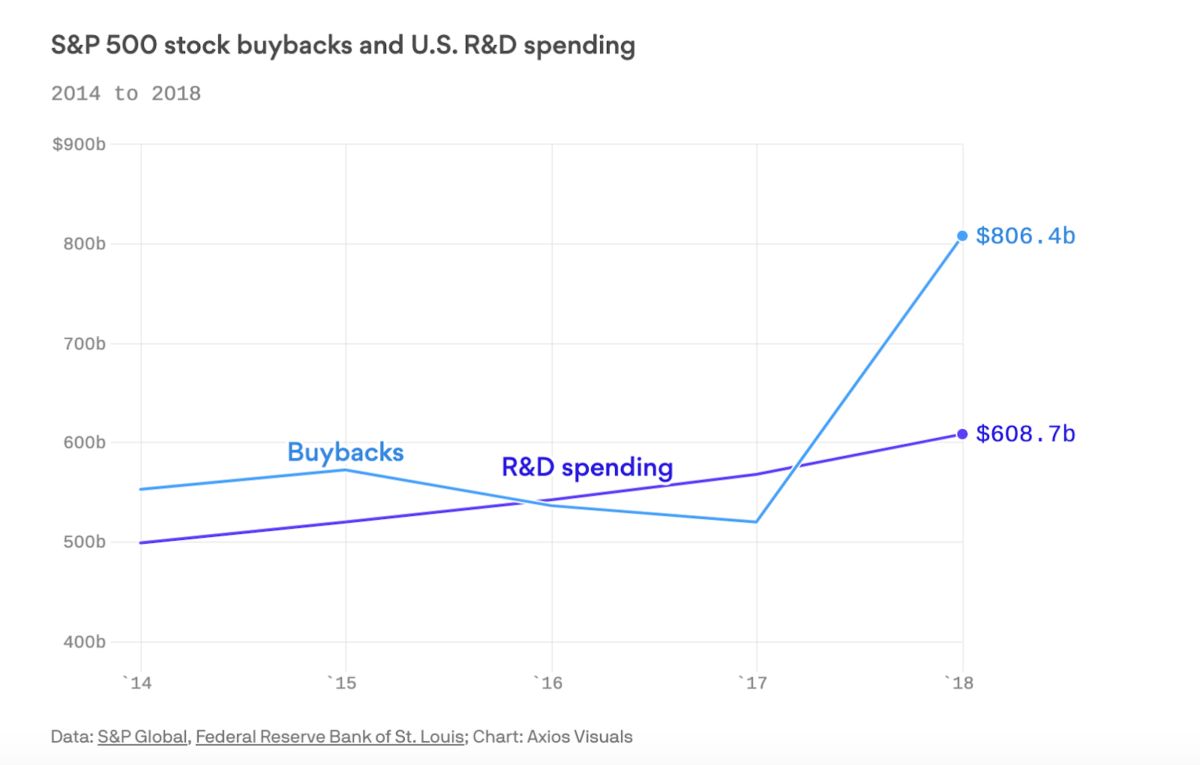
Less than half of the S&P 500 invest any money in R&D. Instead, they are pumping dollars into stock buybacks that ultimately provide no real tangible value to the productivity of the enterprise (sorry Warren). I’m convinced this is stifling innovation and giving startups more room to eat their lunch. Wall Street has no patience when it comes to waiting around to see innovation bare fruit which can sometimes take 4+ years. The unfortunate reality of this is management must then live by a quarter-to-quarter clock which hurts internal innovation. This myopic perspective is further reinforced by hedge funds and activist investors who are chasing short term gains. Allocators of capital need to recognize that management has to be given more leeway to invest for the long run. If they don’t, a heavily funded lean startup will be glad to take their customers.

Share this:

Alibaba – An Alternative to Amazon

As Amazon took off here in the US, another similar startup business took its sights on the Far East.  Alibaba may look similar to AMZN but under the hood they are very different. While AMZN handily beats BABA on top-line, BABA  wins by a large measure on opex margins. This is inherent in their business model which is more similar to Ebay than to AMZN. Whereas AMZN primarily owns warehouses and inventory, BABA is lighter and collects a merchant fee as a middleman between buyers and sellers.

Share this: